How to find the best sunscreen for your skin type?
Choosing a sunscreen should be simple, but with so many options available, it can quickly feel overwhelming. SPF numbers, UVA and UVB protection, mineral versus chemical filters, textures, skin types: there is a lot to navigate. The good news is that once you understand the basics, finding the right sunscreen for your skin becomes much more straightforward. From oily and
SPF, UVA, UVB: what does it all mean?
SPF stands for Sun Protection Factor, and it refers to the level of protection a product provides against UVB rays: the rays primarily responsible for sunburn. The number indicates how much longer skin is protected compared to wearing no sunscreen at all. An
UV rays come in two forms that affect the skin differently. UVB rays affect the surface layers of the skin and are most intense between 11am and 3pm. UVA rays penetrate more deeply, are present year-round even on cloudy days, and can pass through glass. While they do not cause immediate sunburn, they are a key driver of premature skin ageing and contribute to skin cancer risk over time. A good sunscreen should therefore offer broad spectrum protection, shielding skin from both UVA and UVB rays.
At Clarins, all
SPF 30 or SPF 50+: which should you choose?
SPF 30 filters approximately 97% of UVB rays and is considered high protection. SPF 50+ filters around 98% and is considered very high protection. For fair or pale skin, sensitive skin, or anyone spending extended periods outdoors, SPF 50+ is the safer choice. SPF 30 is generally sufficient for light skin that tans, olive skin, and everyday urban use, provided it is applied correctly and reapplied regularly.
How to choose sunscreen by skin type
The best sunscreen for you depends not just on your SPF needs, but on your skin type. Here is how to find the right match.
Oily and acne-prone skin
Oily and acne-prone skin needs a sunscreen that protects without adding to shine or clogging pores. Look for a lightweight, non-comedogenic formula with a matte or dry-touch finish that absorbs quickly and leaves no greasy residue.
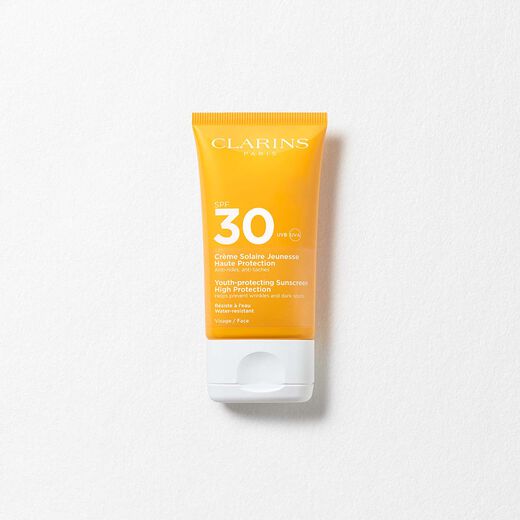
The Clarins Youth-Protecting Sunscreen SPF 30 and SPF 50+ are ideal for this skin type. Their gel-cream formula has a fast-absorbing, dry-touch finish that leaves skin comfortable and matte. For those who wear makeup daily, the
Dry skin
Dry skin benefits from a sunscreen that offers both UV protection and hydration. Look for formulas enriched with moisturising ingredients such as
The
Combination skin
Combination skin benefits from a balanced formula that is light enough to avoid adding to shine in the oilier T-zone while providing enough comfort for drier areas. A gel-cream or fluid texture tends to work well. The
Deeper skin tones
A common concern for those with deeper skin tones is the white cast left by some sunscreens, particularly mineral formulas. Chemical and hybrid sunscreens tend to absorb more seamlessly without leaving a white residue. Tinted sunscreens are also an excellent option. The
Sensitive and eczema-prone skin
Sensitive and eczema-prone skin requires particular care. The wrong formula can trigger irritation, redness, or flare-ups. For reactive skin, mineral sunscreens are often better tolerated, as their physical filters sit on top of the skin rather than being absorbed into it. Look for fragrance-free, hypoallergenic formulas with soothing ingredients such as aloe vera, and avoid products containing harsh chemicals or artificial fragrances that can disrupt the skin barrier.
If you have a specific skin condition such as severe eczema, rosacea, or a history of sun sensitivity reactions, it is worth consulting a dermatologist before choosing a sun care product.
Mineral vs chemical sunscreen: what's the difference?
Chemical sunscreens absorb UV rays and convert them into heat. They tend to have lighter textures, absorb invisibly, and work well under makeup, making them a good fit for oily, combination, and deeper skin tones. Some chemical filters can cause irritation for very sensitive skin.
Mineral sunscreens use zinc oxide or titanium dioxide to physically reflect UV rays. They are generally better tolerated by sensitive and eczema-prone skin and are often the preferred choice for children. Their main downside is a potential white cast, though newer formulations have improved significantly.
Hybrid formulas combine both approaches, offering broad spectrum protection with a more wearable texture across a wider range of skin types.
How and when to apply sunscreen?
-Apply sunscreen as the last step of your morning skincare routine, after moisturiser and before makeup
-Use about half a teaspoon for the face and neck - most people apply far less than needed, which reduces effectiveness
-Be generous on the body and do not forget commonly missed areas such as the ears, back of the neck and tops of the feet
-Reapply every two hours, or immediately after swimming or sweating
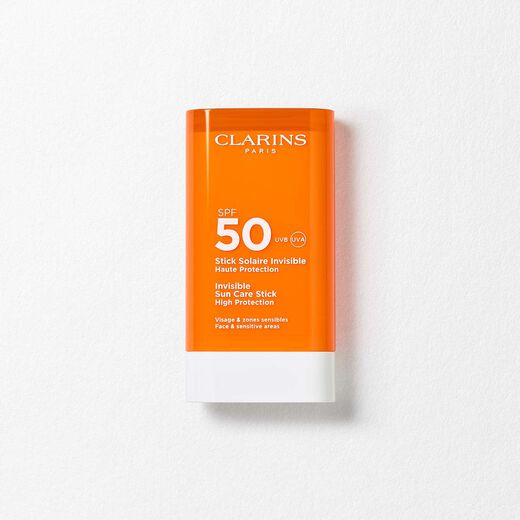
-For on-the-go reapplication, the
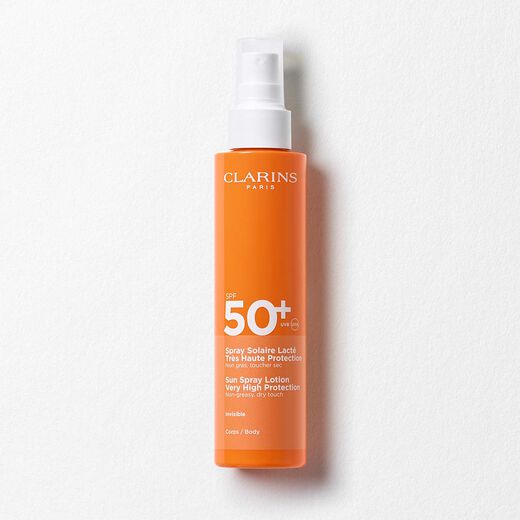
-For the body, the
How to protect children's skin in the sun
Children's skin is more delicate and more vulnerable to UV damage than adult skin. Sun exposure during childhood has a significant long-term impact on skin health, which is why sun protection for children deserves particular attention.
Always use SPF 50+ on children, and choose mineral or mineral-blend formulas where possible, as they are gentler on delicate skin. Apply generously at least 20 minutes before sun exposure and reapply every two hours, or after swimming or towelling dry. Keep babies and very young children out of direct sunlight entirely during peak UV hours, and dress children in protective clothing, wide-brimmed hats, and UV-filtering sunglasses.
Clarins does not currently offer a dedicated children's sun care range. For children's specific products, we recommend consulting your pharmacist or healthcare professional.
FAQ
Do I need to wear sunscreen on cloudy days?
Yes. UVA rays penetrate cloud cover and can cause skin damage even when the sun is not visible. Wearing broad spectrum sun protection year-round is one of the most effective habits for long-term skin health.
Can sunscreen replace moisturiser?
Some hydrating sunscreens provide enough moisture to replace a separate moisturiser, particularly for normal or oily skin. For dry skin, layering a hydrating serum or moisturiser underneath is still recommended.
How do I stop sunscreen from leaving a white cast?
White cast is most commonly associated with mineral sunscreens containing zinc oxide or titanium dioxide. To avoid it, look for chemical or hybrid formulas, or choose a tinted sunscreen.
Can I use the same sunscreen for my face and body?
Technically yes, but
Can I apply sunscreen over makeup?
Reapplying a cream or lotion over makeup can be tricky. A stick format is ideal for touch-ups throughout the day. The Clarins Invisible Sun Care Stick SPF 50 can be applied directly over makeup for convenient, mess-free reapplication.
You might like